
Jumper - The Aggregator to Allocator Pivot
Earn + Portfolio turns Crosschain Routing into Personalized Yield Workflow
Jumper has routed ~$30B across 62 chains as a “swap + bridge + swap” execution surface built on LI.FI. Now it’s trying to capture the next click after the bridge to turn routing flow into retained, crosschain yield management via Earn (discovery + one-click deployment) and Portfolio (post-execution management).
The bet is that in a fragmented multichain world, the app that owns the full loop (move assets, find yield, manage positions) compounds user stickiness in ways a pure routing utility never can.
This edition covers why routing distribution is an underrated yield funnel, how Earn personalizes opportunity discovery, and why Portfolio is the retention layer that determines whether this pivot sticks.

Introduction to Jumper
Jumper is the consumer app while LI.FI works as the routing infrastructure underneath. When a user wants to move from Token X on Chain A to Token Y on Chain B, Jumper abstracts what used to be several manual steps into one orchestrated route (swap > bridge > swap). Execution reliability ensures that once a wallet trusts a router for size and speed, it becomes the first tab opened whenever opportunity emerges.
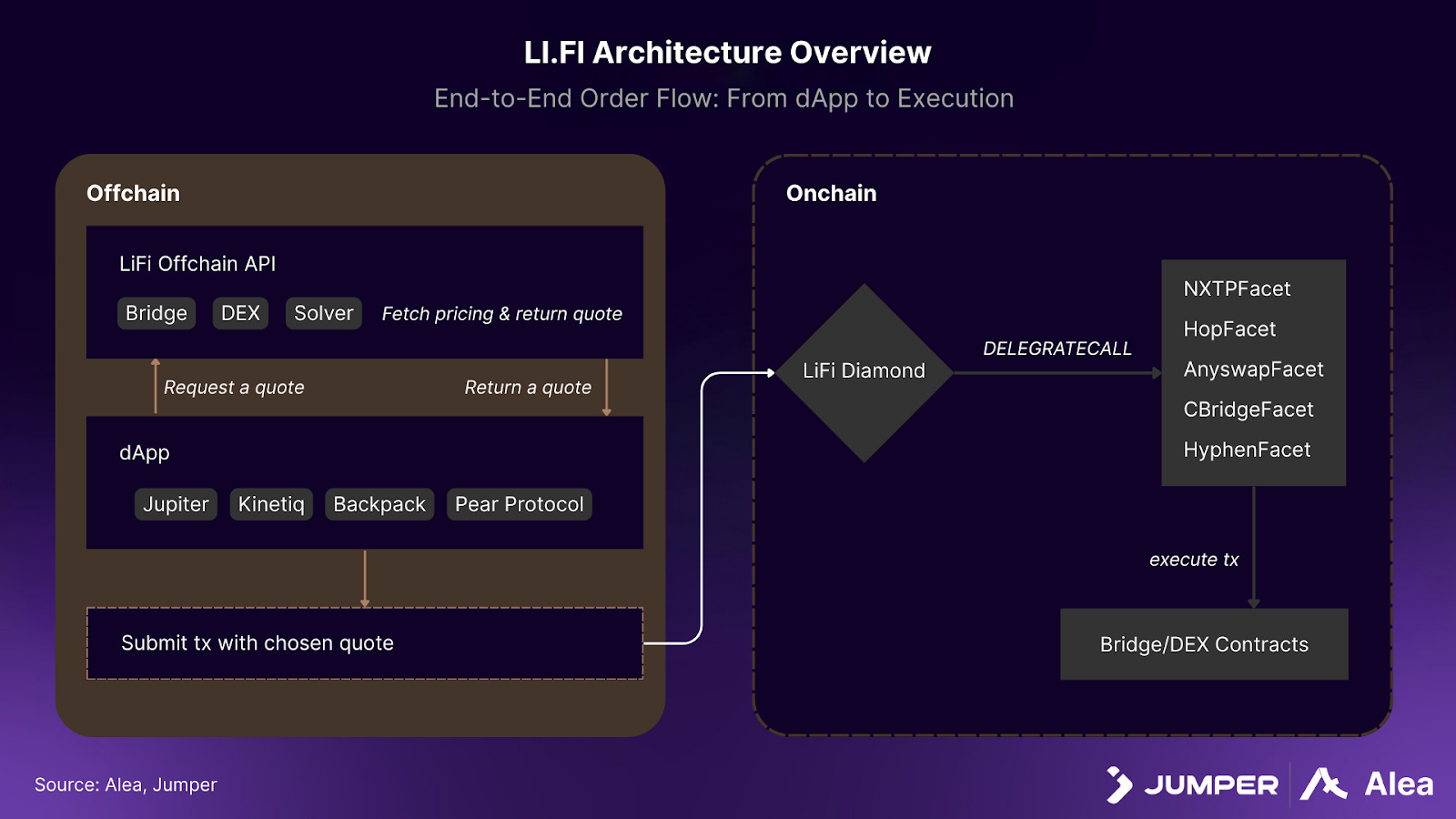
LI.FI uses a modular diamond contract architecture (EIP-2535) that lets a single onchain entrypoint delegate to different facets for bridges and DEX integrations. As of Jan 2026, Jumper’s integration depth spans 62 chains, 23 bridges, and 21 DEXs across almost all major chains.
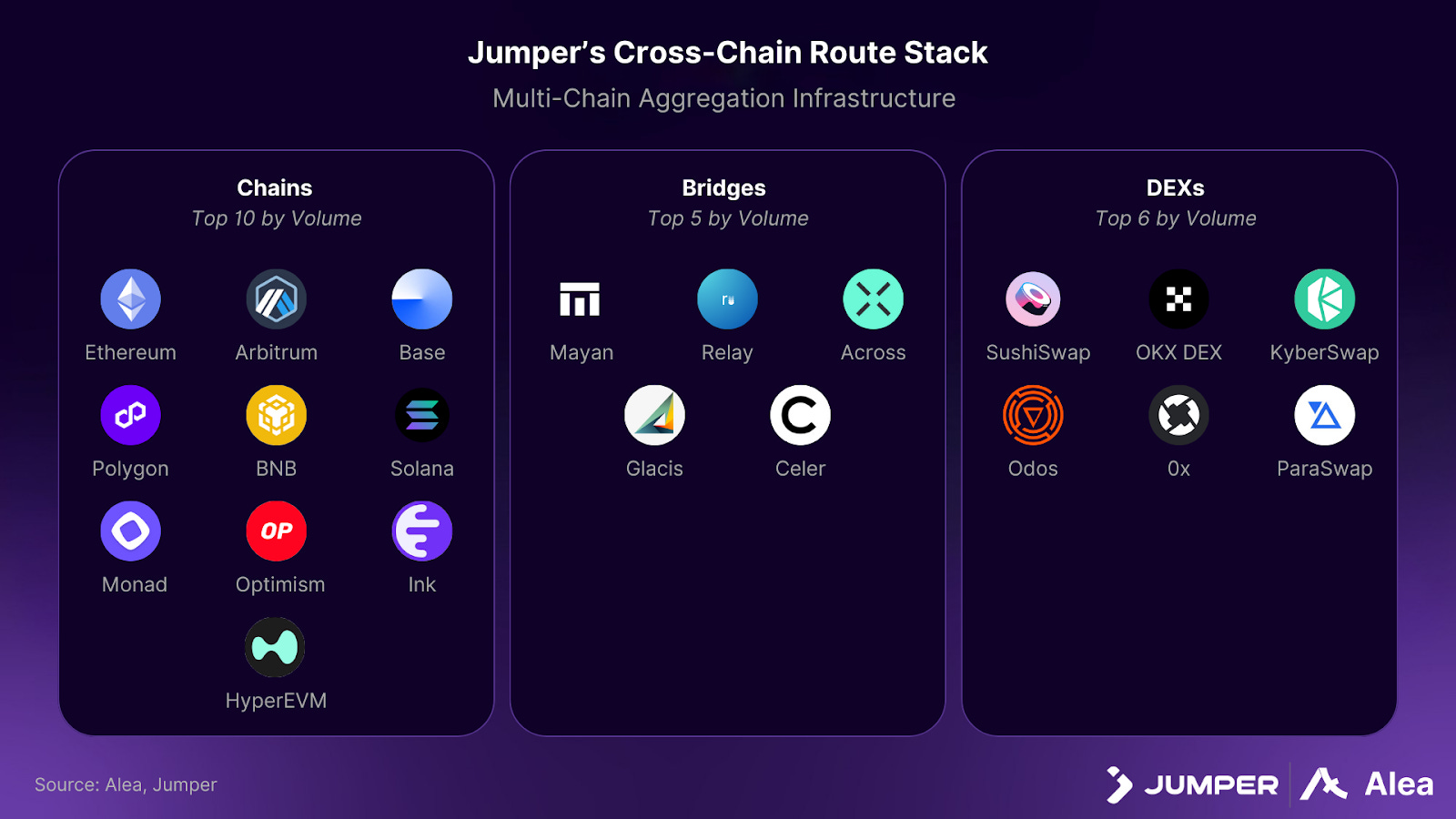
Since Jumper already owns the movement leg. The strategic question is whether it can also own deployment and management, because that’s where stickiness compounds.
Reality of Multichain Yields
DeFi TVL has grown from $50 billion in 2023 to over $100 billion today with over 100 active chains. Multichain didn’t just create more places to deploy capital, it created constant dispersion of yields, incentives, and liquidity depth across venues.
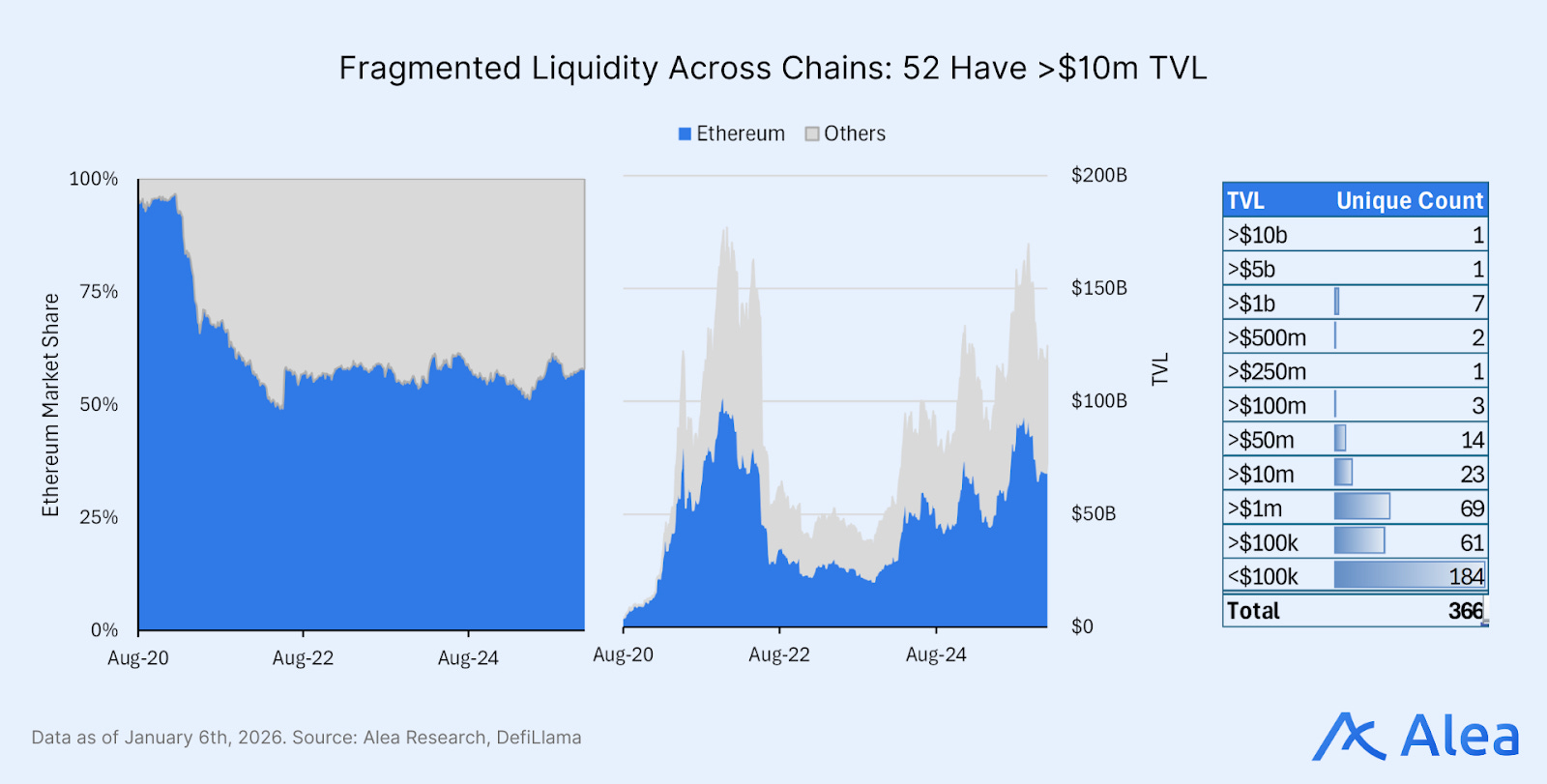
Today, even sophisticated users have a fragmented stack for yield farming strategies: discover opportunities (feeds, dashboards), route assets (bridge/router), deploy on a protocol UI, track positions elsewhere, and repeat when yields compress. This has led to a rise in crosschain activity which sees TVL move to where yields are highest. For example, USDT yields on Aave on Ethereum offers a base 2.34%, Arbitrum offers 2.20%, but on Plasma its 3.09% + 0.49% of XPL rewards.
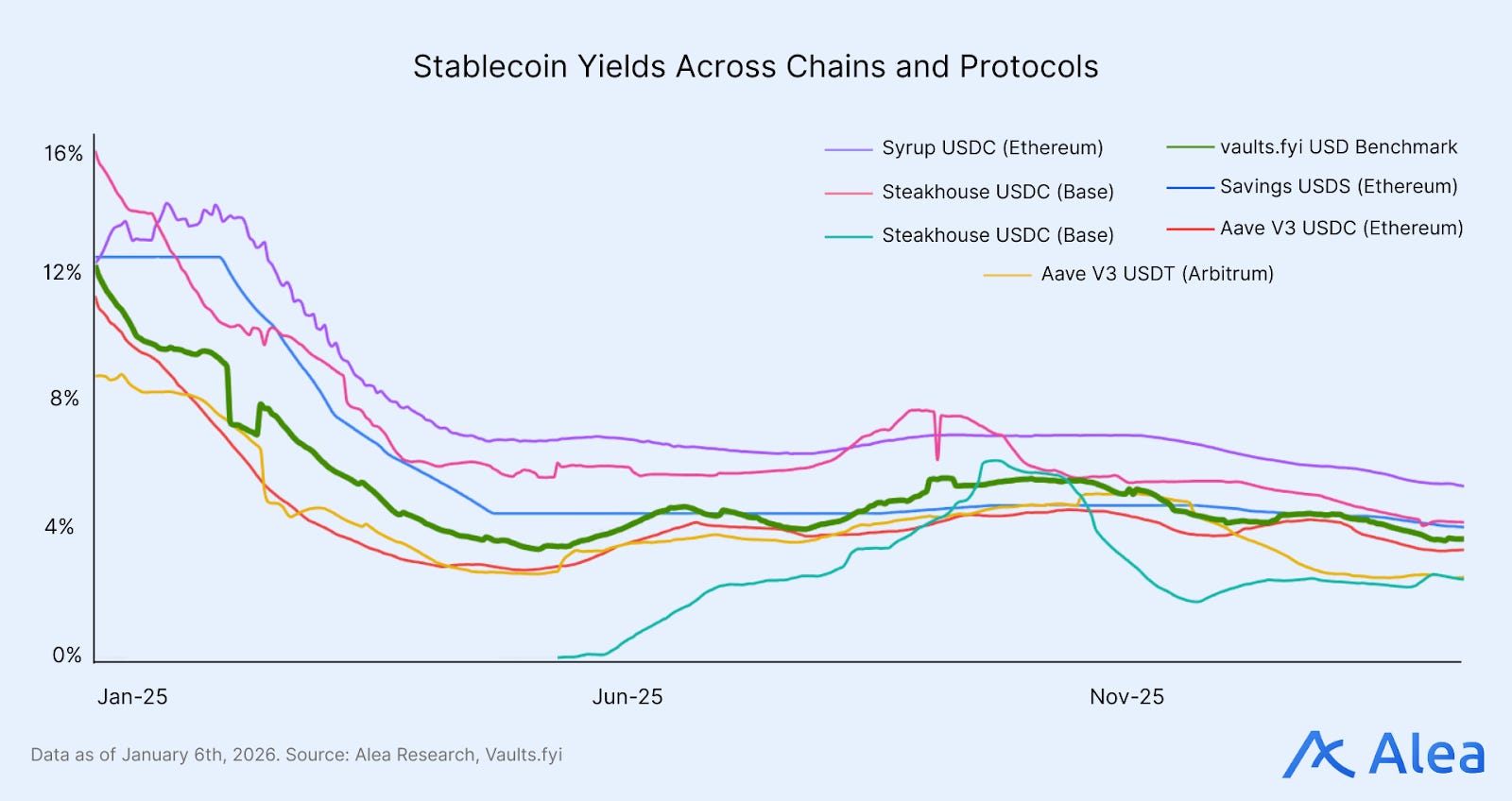
Jumper’s framing is that multiple platforms create drop-offs where users bridge in for an opportunity, but allocation happens outside the router.
Routing is becoming commoditized as margins compress and Jumper’s distribution alone isn’t defensible. For it to be defensible, they have to capture the entire loop: capital moves > capital deploys > positions get managed in the same place.
The Pivot: Earn and Portfolio
Jumper's ~$30 million daily asset flow represents a significant yield opportunity currently going untapped. Today, users must separately discover and deposit into yield farms after their assets are bridged. That step happens outside of Jumper. Owning this workflow end-to-end captures yield-seeking capital that bridges for higher rates, liquidity incentives, or farming programs.
Earn is Jumper’s attempt to turn routing flow into an allocation decision. Instead of surfacing a generic APY leaderboard, it filters opportunities using 4 signals:
Existing DeFi positions
Token holdings
Chain activity
Risk profile

Portfolio provides crosschain position management that is action-oriented, not read-only. The goal is to monitor, rebalance, and rotate yields without leaving the platform.
Earn wins the entry from its large distribution channel, but Portfolio needs to win the return visits. If Portfolio becomes good enough that users manage positions there by default, Earn becomes sustainable rather than a one-off feature.
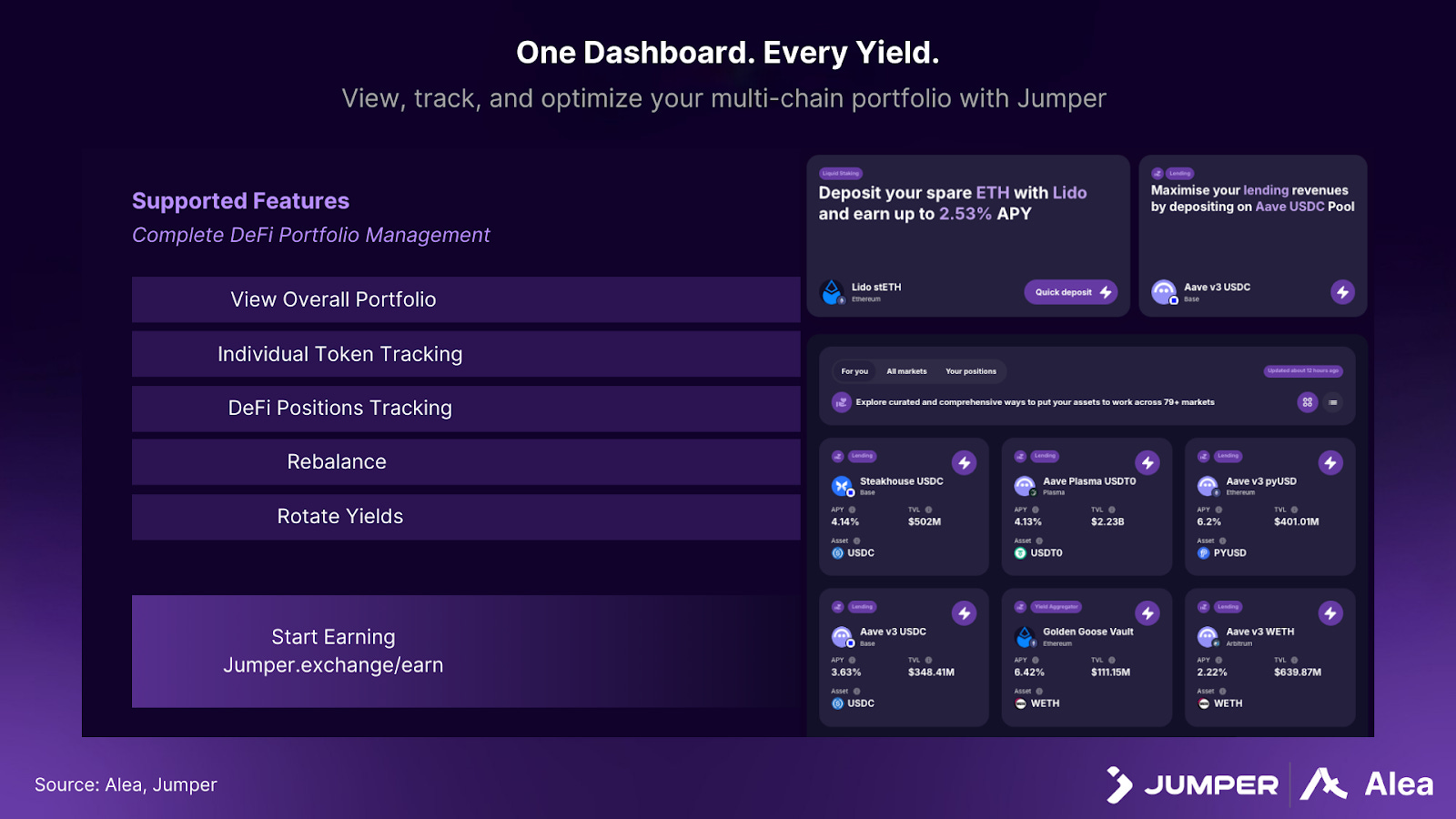
Jumper’s user funnel extends beyond direct usage. LI.FI’s routing infrastructure is embedded in Rabby, Phantom, Jupiter, and Hyperliquid which are major wallets and protocols that expose millions of users to Jumper’s backend. Every wallet connection generates behavioral data including chains frequented, tokens held, swaps executed. Earn applies that data to surface personalized opportunities.
Conclusion + What to Watch
Jumper is playing the aggregator to allocator pipeline, which is the same playbook MetaMask tried with swaps and staking (and mostly fumbled). Earn + Portfolio launched January 13, so the thesis is in proving phase. The cleanest validation is conversion and retention, rather than headline volumes.
Important metrics to look at include the share of bridgers/swappers actually deploying on Earn, and how many of those users return to manage their portfolio over how long.
Important Links
Disclosure
Alea Research is engaged in a commercial relationship with Jumper as part of an educational initiative, and this newsletter was commissioned as part of that engagement. This content is provided for educational purposes only and does not constitute financial or investment advice. You should do your own research and only invest what you can afford to lose. Alea Research is a research platform and not an investment or financial advisor.

Become a Premium member today to unlock all our research & reports.
Join thousands of sharp crypto investors & traders by becoming a Premium Member & gain an edge in the markets. For just $149/month, you can access our full suite of offerings:
Gain access to Deep Dives, Blueprints, Perspectives, Theses, Benchmarks & Outlooks.
Weekly market update reports and key actionable insights, keeping you informed as the market evolves.
Full access to historical research archive, including hundreds of long-form reports.